
On autumn
And how I find the fields good for my soul

I took the dog for a walk by myself last Sunday afternoon. (A solo weekend walk isn’t a total rarity, but just uncommon enough to make note of its out-of-the-ordinary nature.) And because I didn’t have a time limit or small human legs in tow, we crossed the street and took the dirt track up to the footpath that winds around the wide perimeter of arable fields a few minutes from the house.
It was one of those rare times where I didn’t have the work phone buzzing in my back pocket, nor headphones connecting me to someone else’s thoughts. It was me, the dog, and the fields. And it was the most grounding hour I’ve spent in months.
I find farmed fields particularly reassuring. While ancient English forests are the landscape I most prefer, and being by any form of water is delightful, time spent in and around and passing through arable farmland connects me to the earth and to nature in a much more primal way than any other scenery.
It’s in the fields that the passing of time and the rolling of the seasons is most easily seen. The markers of nature’s year can’t be tidied away or ignored like they can in the city and the changes from green to yellow to brown and grey mark the unstoppable passage of time in a way that’s all at once much more gradual but more forceful than anything that mankind and our consumerism could design.
And last Sunday, the fields offered up the ascent to autumn in the most vivid and unassailable way.
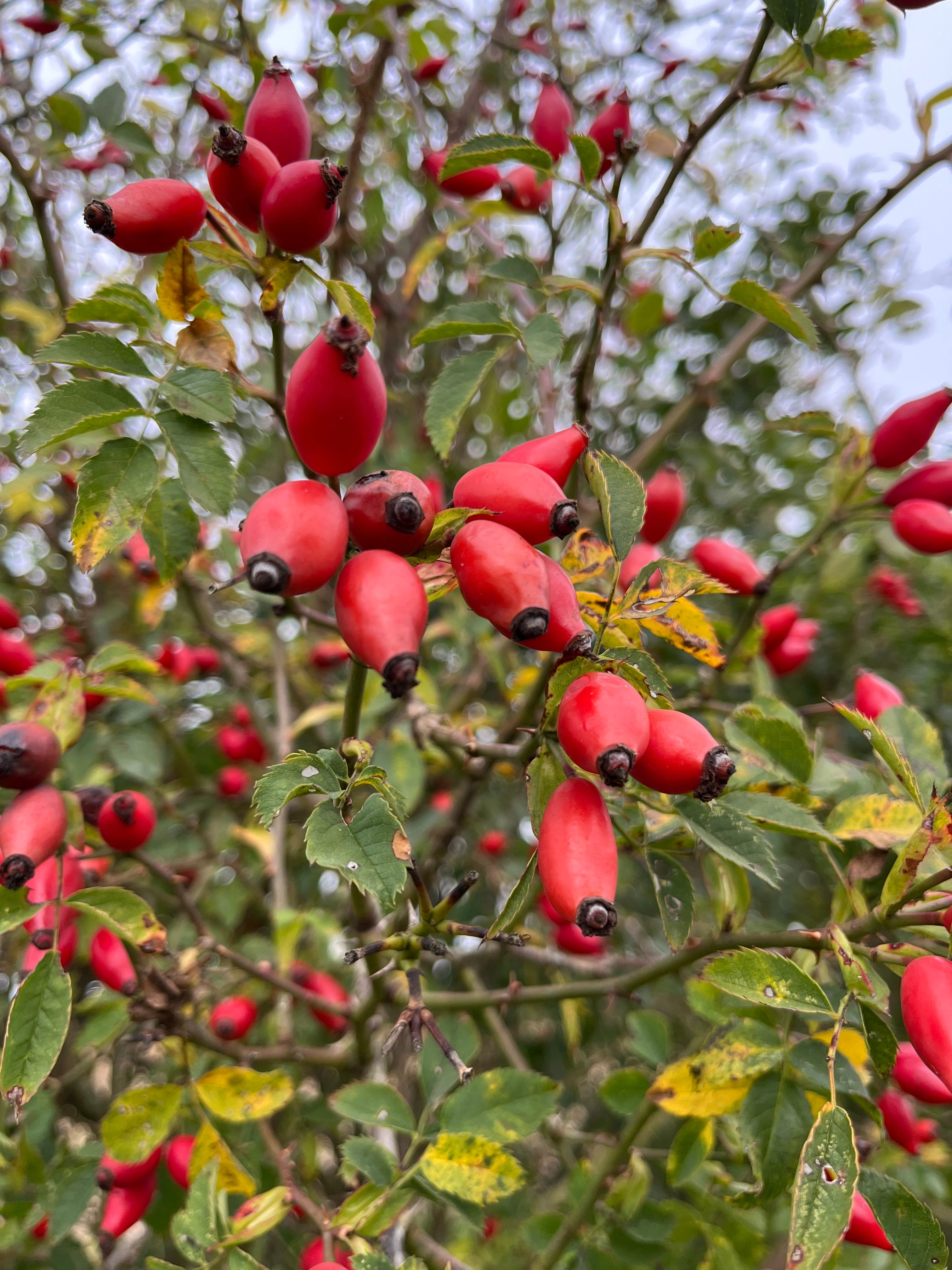
It was in the enveloping smell of fresh loam in the copse at the edge of the field. In the colours, not of the leaves, but in the browns and yellows of drilled fields, the big white skies, the grey-greens of the damp grass on the footpath, the blood-red drops of rosehips in the hedgerows.
All of the summer’s heat had left with the swallows but to describe the temperature as cool or chilled wouldn’t be nearly accurate nor specific enough to properly capture how there was just a graze of something in the air and on the skin that left a pink tinge in the height of the cheeks on the way back through the front door.
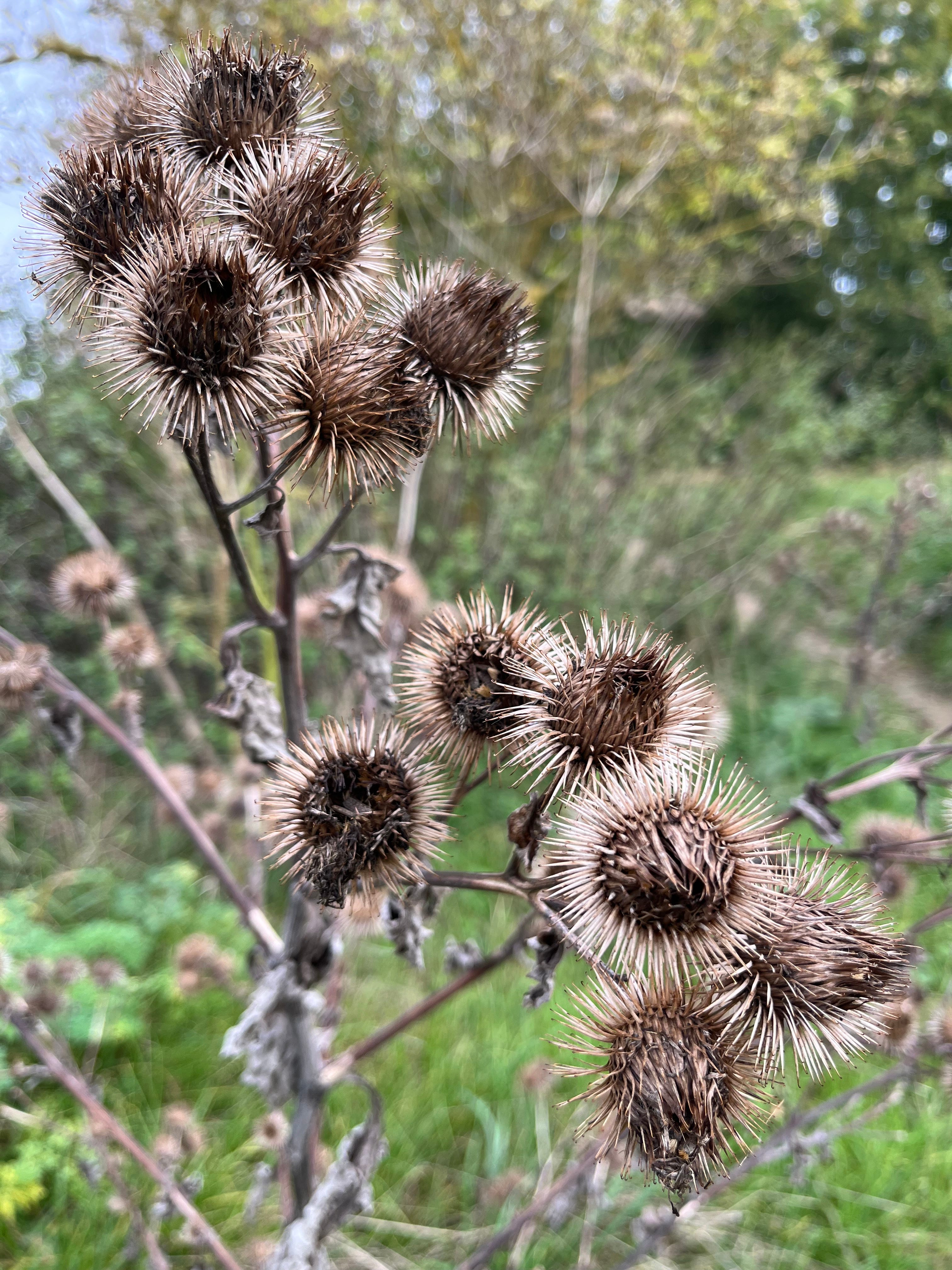
The burdock had lost the shock of purple, instead lining the ditches with its architectural spines. Teasels worked their way into the dog’s fur as she rootled through the grasses, tracking unseen rabbits across the paths. In the hedgerows hung Old Man’s Beard, spun-sugar clouds scattered over the brambles. The ground yielded underfoot - not yet the winter clods of mud, nor the previous dusty hard rock of summer.
And I know for many the autumn is a time of profound melancholy: the balmy summer’s warmth and long evenings and promise of frivolity is on its way out, to be swapped for cold and dark and wet and bleak.
But I don’t see it like that. To me, the autumn ushers in hibernation and renewal and anticipation. The end of the summer crops are ploughed back into the earth, and the hedgerows are full of fruit - we might not see all the goodness, but it’s there, waiting to bloom, to be rediscovered, for a quiet restoration to begin.